Producing a thermoformed component once is one thing. Producing it again to the same dimensions, finish and fit is where repeatability matters.
For customers in aerospace, medical, automotive, construction, agri-tech and other industrial sectors, even small variations can cause problems further along the production process. A fixing point that does not line up or a trimmed edge that is slightly out can lead to delays, wasted material and fit issues during assembly.
At Donite Plastics, we consider repeatability at each stage, from tooling and forming through to CNC trimming and inspection. In this blog, we explain how these controls help maintain consistency and what customers should ask a thermoforming partner about quality control.
Getting the tooling and process right
The mould affects the shape, dimensions and surface finish of the finished part, so the tooling needs to be considered from the start.
At Donite Plastics, we manufacture tooling in-house and also work with trusted manufacturing partners to produce mould tools and trim fixtures.
Once the computer model has been approved, we use our CAD and CAM facilities to create the CNC programmes needed to manufacture the mould and trim the formed parts.
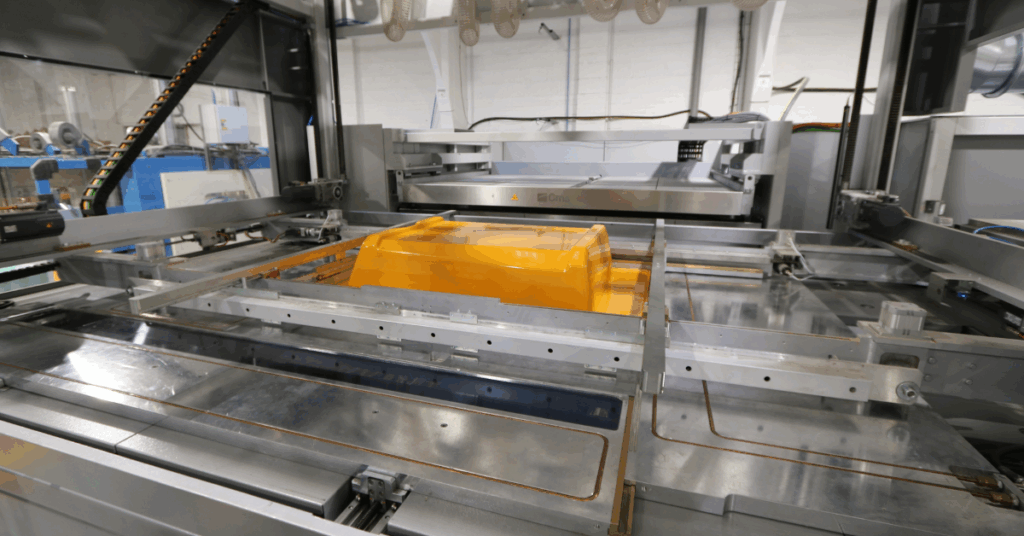
Vacuum forming creates the main shape of the component. Our 3-axis and 5-axis CNC machines are then used to trim and finish the part to the required design.
Checking quality during production
Quality checks should happen throughout production rather than being left until the end.
Finding an issue early means less material, labour and machine time are spent on a part that does not meet the required standard.
The checks will depend on the part, its use and the customer specification.
Donite Plastics holds AS9100D and BS EN ISO 9001:2015 certification for the design, manufacture and assembly of thermoformed products. We first achieved ISO 9001 certification in June 1997.
These certifications support the quality systems used across our design and manufacturing work.
Reducing waste, delays and fitting problems
A part that does not fit may need further trimming, rework or replacement. This uses more material, labour and machine time and can delay the next stage of production.
A repeatable process helps reduce rejected parts, fit issues, material waste and production delays.
It also gives customers confidence when ordering the same component again, particularly when that part remains in production for several years.
What should you ask a thermoforming partner?
Before placing a project, ask how the manufacturer manages the work from design through to repeat production.
Useful questions include:
- Can the supplier support design, tooling, forming, trimming and assembly?
- How are drawings and production requirements managed?
- What quality checks will apply to the project?
- How are tooling and project details kept between orders?
- Which quality certifications does the company hold?
- Can the supplier provide finished assemblies as well as individual parts?
These questions will give you a clearer idea of how the supplier works and what will happen when the part is ordered again.
At Donite Plastics, we provide design, tooling, vacuum forming, CNC trimming and assembly services.
For us, repeatability means producing a part that matches the original specification and performs consistently each time.