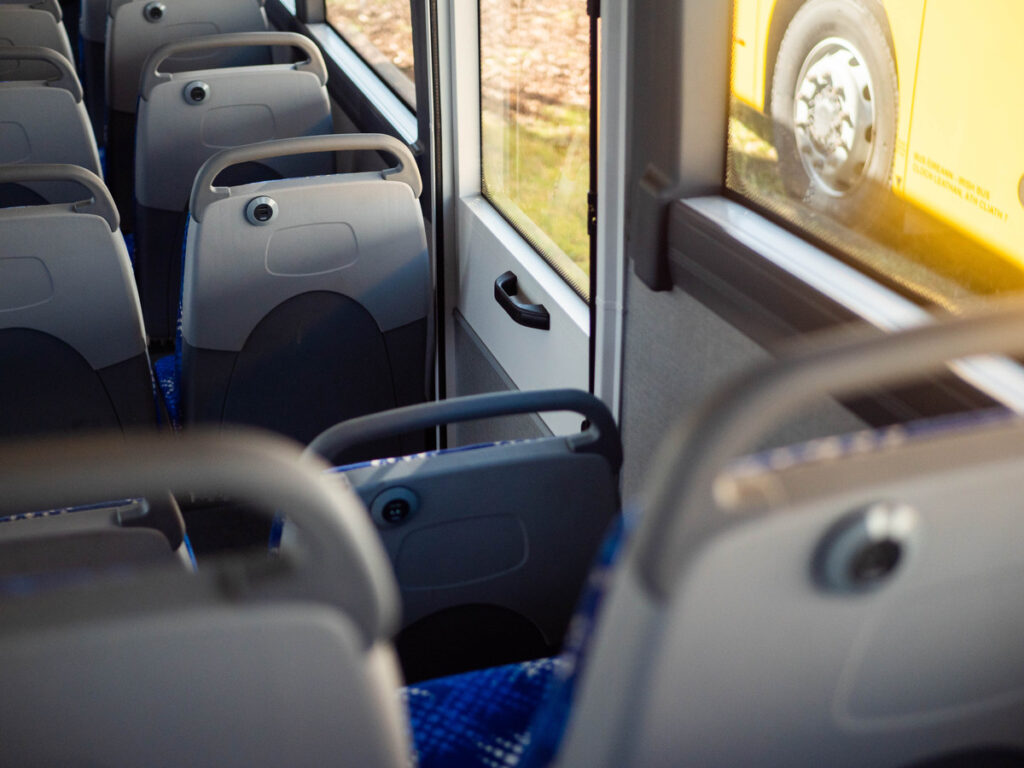
Transport manufacturers across the UK and Ireland are under pressure to control cost, reduce weight and keep production moving. At the same time, public investment in lower emission transport is increasing demand for parts that are practical to develop and reliable to manufacture. That is creating a fresh demand for manufacturing processes that can support large parts, consistent quality and repeatable output without adding delay.
We at Donite Plastics have seen this first hand. Manufacturers need parts that can move from development into repeat production without slowing the wider programme. That is one reason thermoforming remains a strong fit for transport manufacturing, especially where large plastic parts and steady batch runs are involved.
In many cases, the decision comes down to part size, annual volume and lead time. If a manufacturer needs a large plastic part in relatively low volumes, thermoforming is often the right process. It also gives more flexibility at the development stage, with design input and prototyping helping refine the part before production starts. In transport, where components are often large, shaped and difficult to produce efficiently using other methods, that flexibility has clear value.
We support transport applications including high surface finish panels for mass transit, along with specialist electronics housings and control panels, where thermoforming offers a practical route for large parts and lower volume production. By combining vacuum forming with CNC trimming as part of the process, we help customers move parts forward in a form that is ready for the next stage.
Lead time is important, but so is the condition of the part when it reaches production. Components need to be ready for assembly, not waiting for extra work. We support projects from design and tooling through to forming, trimming and finishing, with in house capability across key stages and trusted external support for tooling where needed. Our service includes CAD and CAM design, vacuum forming, 3 axis and 5 axis CNC machining, mould tools and trim fixtures, and value add assembly and finishing.
This work sits within a strong manufacturing base in Northern Ireland, where the plastics and polymer sector continues to invest in materials, skills and production capability. For transport manufacturers, dependable local expertise can support product development, improve repeatability and help maintain supply.
Weight reduction is another factor. In our aerospace development work with the Northern Ireland Technology Centre at Queen’s University Belfast, focused on bonded twin skin vacuum formed panels for aircraft interiors, the latest panel development delivered up to 39% weight reduction and 89% part reduction per panel. The project also focused on improving speed, repeatability and accuracy in assembly. While this work was carried out in aerospace, the same focus on lightweighting and efficient manufacture has clear relevance across the transport sector.
For transport manufacturers across the UK and Ireland, the case for thermoforming is straightforward. When large parts, lower volumes and short lead times need to be managed at once, it offers a practical and dependable route into production. As pressure grows to reduce weight and keep programmes moving, that mix of flexibility, repeatability and manufacturing support is helping make thermoforming an effective choice across the sector.